

Hey there! As a supplier of flexo printing machines, I often get asked how these machines stack up against other printing methods out there. Well, let's dive right in and break down the differences.
First off, let's talk about what flexo printing is. Flexography is a form of relief printing, where the image to be printed is raised above the non - printing surface. The ink is transferred from an anilox roller to the printing plate and then onto the substrate. This process is used for a wide range of materials, from paper and cardboard to plastic films and even metal foils.
Print Quality
When it comes to print quality, flexo printing machines have their own unique characteristics. Compared to offset printing, which is widely used in the commercial printing industry, flexo printing can achieve a different level of detail. Offset printing is known for its high - resolution and sharp image quality, especially for fine text and complex graphics. It uses a flat plate and a blanket to transfer the ink, which allows for very precise ink laydown.
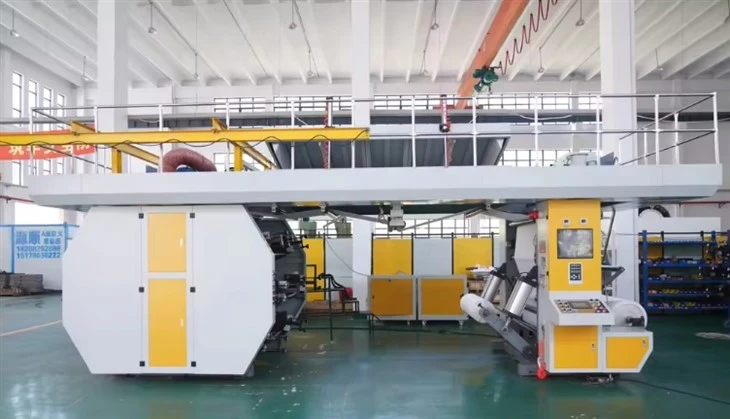
On the other hand, flexo printing is better suited for larger solid areas and bold graphics. The flexo plates are made of rubber or photopolymer, and they can hold a good amount of ink, resulting in vibrant colors on the printed material. For example, if you're printing large - scale packaging with bright colors and simple designs, a flexo printing machine might be a great choice. You can check out our 4 Color Central Drum Flexo Printing Machine which is designed to deliver excellent color saturation on various substrates.
Digital printing is another popular method these days. It offers the advantage of variable data printing, which means you can print different images or text on each piece without having to change the printing plates. Digital printing is also great for short - run jobs because there's no need for plate - making, which can save time and money. However, in terms of color consistency and speed for large - volume jobs, flexo printing machines have an edge. Flexo can print at high speeds, making it more efficient for mass - producing packaging and labels. Our Central Impression Flexo Press is capable of handling high - volume production with consistent quality.
Substrate Compatibility
One of the biggest advantages of flexo printing machines is their wide substrate compatibility. Unlike some other printing methods, flexo can print on a variety of materials, including porous and non - porous surfaces. Offset printing, for instance, is mainly used for paper - based materials. It has some limitations when it comes to printing on plastics or other non - absorbent materials because the ink needs to be absorbed into the substrate to dry properly.
Digital printing also has some substrate limitations. While it can print on a decent range of materials, the quality can vary depending on the surface. Flexo printing machines, on the other hand, can easily handle materials like plastic films, corrugated cardboard, and even some types of metal. This makes them a top choice for the packaging industry, where different materials are used for different products. Our Ci Flexographic Printing Machine is designed to work with a wide range of substrates, giving you more options for your printing projects.

Cost - Efficiency
Cost is always a major factor when choosing a printing machine. For long - run jobs, flexo printing can be very cost - effective. Once the printing plates are made, the cost per unit for high - volume production is relatively low. Offset printing also has a low cost per unit for large - scale jobs, but the initial setup cost, including plate - making and press calibration, can be quite high.

Digital printing, on the other hand, is more expensive per unit for large - volume jobs. The cost of ink and the printing process itself make it less economical when you need to print thousands or millions of copies. However, for short - run jobs, digital printing can be a cost - effective option because there's no need for plate - making.
Flexo printing machines strike a good balance between setup cost and production cost. The plate - making process is not as expensive as offset plates, and the high - speed production capabilities make it a great choice for medium to large - volume jobs.
Environmental Impact
In today's world, environmental impact is an important consideration. Flexo printing has some environmental advantages compared to other methods. Many flexo inks are water - based, which means they have lower volatile organic compound (VOC) emissions compared to solvent - based inks used in some other printing processes. Water - based inks are also easier to clean up, reducing the amount of waste generated during the printing process.
Offset printing often uses solvent - based inks, which can release harmful VOCs into the environment. Digital printing, depending on the type of ink and technology used, may also have some environmental concerns. For example, some digital inks contain chemicals that are not easily biodegradable.
Flexo printing machines, with their ability to use water - based inks and their efficient production process, are a more environmentally friendly option for many printing applications.
Maintenance and Operation
When it comes to maintenance and operation, flexo printing machines have their own set of requirements. Compared to offset printing machines, which are generally more complex and require a high level of skill to operate, flexo printing machines are relatively easier to handle. The plate - mounting process is simpler, and the anilox roller system is easy to maintain.
Digital printing machines are also relatively easy to operate, but they require regular software updates and may have more sensitive components. Flexo printing machines, on the other hand, have fewer electronic components and are more robust in industrial environments. However, they do require regular cleaning of the anilox rollers and the printing plates to ensure consistent print quality.
Speed and Productivity
Flexo printing machines are known for their high - speed production capabilities. They can print at speeds of up to several hundred meters per minute, depending on the machine model and the substrate being used. This makes them ideal for mass - producing labels, packaging, and other printed materials.
Offset printing machines can also achieve high speeds, but they often require more time for setup and plate - changing. Digital printing machines are generally slower, especially for large - volume jobs. The speed of digital printing is limited by the printing technology and the drying time of the ink.

So, if you need to produce a large quantity of printed materials in a short period of time, a flexo printing machine is definitely a great option.
In conclusion, flexo printing machines offer a unique combination of print quality, substrate compatibility, cost - efficiency, environmental friendliness, ease of operation, and high - speed production. Whether you're in the packaging industry, label printing business, or any other field that requires high - volume printing, a flexo printing machine can meet your needs.
If you're interested in learning more about our flexo printing machines or want to discuss your specific printing requirements, feel free to reach out to us. We're here to help you find the best printing solution for your business.
References
- Smith, J. (2020). The Basics of Printing Technologies. Printing Press Publications.
- Johnson, A. (2021). Comparing Printing Methods for the Packaging Industry. Packaging World Journal.