

In the dynamic world of printing, maintaining consistent print quality is the holy grail for businesses across various industries. As a dedicated supplier of CI Flexo Printing Presses, I've witnessed firsthand how these remarkable machines revolutionize the printing process, guaranteeing unparalleled consistency in every print job. In this blog post, I'll delve into the intricate mechanisms and advanced features that enable a CI Flexo Printing Press to achieve and sustain top-notch print quality.
Understanding the Basics of CI Flexo Printing Press
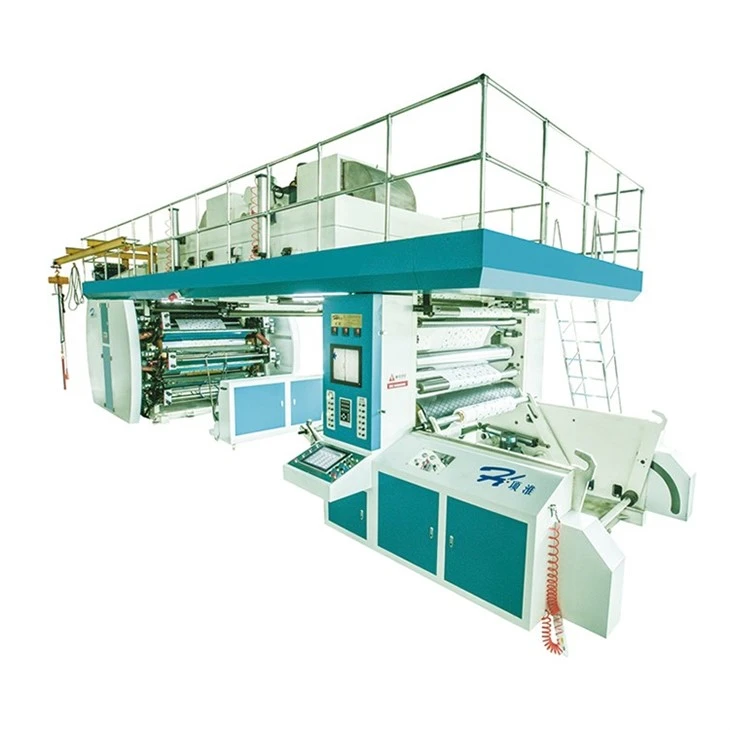
Before we explore how CI Flexo Printing Presses ensure consistent print quality, let's briefly understand what they are. CI stands for Central Impression, which refers to the central drum design of the press. In a CI Flexo Printing Press, all the printing units are arranged around a large central drum. This design offers several advantages, including precise registration, efficient ink transfer, and the ability to print on a wide range of substrates.
Precision Engineering for Consistent Registration
One of the primary factors contributing to consistent print quality is precise registration. Registration refers to the accurate alignment of different colors and printing elements on the substrate. A CI Flexo Printing Press achieves exceptional registration through its advanced mechanical and electronic systems.
The central drum design plays a crucial role in maintaining registration. Since all the printing units are mounted around the central drum, the substrate is held firmly in place as it passes through each printing station. This ensures that each color is printed in the exact position relative to the others, resulting in sharp, clear images and text.
In addition to the mechanical design, modern CI Flexo Printing Presses are equipped with sophisticated electronic registration systems. These systems use sensors to detect the position of the printed image on the substrate and make real-time adjustments to the printing units. This ensures that any variations in substrate tension, speed, or temperature are automatically compensated for, maintaining consistent registration throughout the printing process.
Advanced Ink Delivery Systems
Another key factor in achieving consistent print quality is the efficient and uniform delivery of ink to the printing plate. A CI Flexo Printing Press uses advanced ink delivery systems to ensure that the right amount of ink is applied to the substrate at all times.
One of the most common ink delivery systems used in CI Flexo Printing Presses is the anilox roll. The anilox roll is a precision-engineered cylinder with a pattern of tiny cells engraved on its surface. These cells hold a specific volume of ink, which is transferred to the printing plate as it rotates. The size and density of the cells on the anilox roll determine the amount of ink that is applied to the substrate.
To ensure consistent ink transfer, CI Flexo Printing Presses are equipped with automatic ink viscosity control systems. These systems monitor the viscosity of the ink and adjust the temperature and pressure of the ink delivery system accordingly. This ensures that the ink flows smoothly and evenly onto the printing plate, resulting in consistent color density and coverage.
In addition to the anilox roll and ink viscosity control systems, CI Flexo Printing Presses also use advanced doctor blade systems to remove excess ink from the anilox roll. The doctor blade is a thin, flexible blade that is positioned against the anilox roll to wipe off any ink that is not needed for printing. This ensures that only the right amount of ink is transferred to the printing plate, resulting in sharp, clear images and text.
High-Quality Printing Plates
The quality of the printing plate also plays a crucial role in achieving consistent print quality. A CI Flexo Printing Press uses high-quality flexographic printing plates that are made from durable materials and have a precise surface finish.
Flexographic printing plates are typically made from photopolymer materials, which are sensitive to light. The printing image is transferred onto the plate using a photographic process, which creates a relief image on the surface of the plate. The raised areas of the plate hold the ink, while the recessed areas remain ink-free.
To ensure consistent print quality, it is important to use high-quality printing plates that have a uniform surface finish and accurate image reproduction. Modern CI Flexo Printing Presses are equipped with advanced plate mounting systems that ensure that the printing plate is mounted securely and evenly on the printing cylinder. This ensures that the plate is in contact with the substrate at all times, resulting in consistent ink transfer and image quality.
Substrate Handling and Tension Control
The way the substrate is handled and the tension is controlled during the printing process also has a significant impact on print quality. A CI Flexo Printing Press uses advanced substrate handling systems to ensure that the substrate is fed smoothly and evenly through the printing machine.
One of the most important aspects of substrate handling is tension control. Tension control refers to the regulation of the force applied to the substrate as it moves through the printing machine. If the tension is too high, the substrate may stretch or tear, resulting in poor print quality. If the tension is too low, the substrate may wrinkle or sag, causing registration problems and uneven ink coverage.
To ensure consistent tension control, a CI Flexo Printing Press uses a combination of mechanical and electronic systems. These systems monitor the tension of the substrate at various points along the printing path and make real-time adjustments to the tensioning devices. This ensures that the substrate is held at a constant tension throughout the printing process, resulting in consistent print quality.
Quality Control and Monitoring
Finally, a CI Flexo Printing Press is equipped with advanced quality control and monitoring systems to ensure that every print job meets the highest standards of quality. These systems use sensors and cameras to detect any defects or variations in the printed image and make real-time adjustments to the printing process.
One of the most common quality control systems used in CI Flexo Printing Presses is the vision system. The vision system uses high-resolution cameras to capture images of the printed substrate as it passes through the printing machine. These images are then analyzed by a computer algorithm to detect any defects or variations in the printed image, such as missing dots, smudges, or color variations.
If a defect is detected, the vision system automatically alerts the operator and can even make real-time adjustments to the printing process to correct the problem. This ensures that any quality issues are identified and resolved quickly, minimizing waste and downtime.
In addition to the vision system, CI Flexo Printing Presses are also equipped with other quality control systems, such as ink density sensors, registration sensors, and substrate thickness sensors. These systems work together to ensure that every print job meets the highest standards of quality, consistency, and accuracy.
Conclusion
In conclusion, a CI Flexo Printing Press is a highly sophisticated and advanced printing machine that is designed to ensure consistent print quality. Through its precision engineering, advanced ink delivery systems, high-quality printing plates, substrate handling and tension control systems, and quality control and monitoring systems, a CI Flexo Printing Press can produce sharp, clear images and text with consistent color density and coverage.
If you're in the market for a CI Flexo Printing Press, I encourage you to explore our range of products. We offer a wide variety of PE Film Flexo Printing Machine, 4 Color Central Drum Flexo Printing Machine, and 4 Color CI Type PE Breathable Film Flexo Printing Machine to meet the needs of different industries and applications.
Our team of experts is always available to provide you with more information and help you choose the right printing press for your business. Contact us today to learn more about how a CI Flexo Printing Press can help you achieve consistent print quality and take your printing business to the next level.

References
- "Flexographic Printing: Principles and Practices" by Dr. John C. Harvey
- "The Printing Handbook" by Mark Irwin and Chris Leach
- "Printing Technology: A Complete Guide" by David Hornung