

As a supplier of FFS Film Flexo Printing Machine, one question that frequently arises from our clients is whether our machine can print on laminated films. In this blog post, I will delve into this topic and provide a comprehensive answer based on scientific knowledge and our practical experience in the industry.
Understanding Laminated Films
Laminated films are created by bonding two or more layers of different materials together. This process is often used to enhance the properties of the film, such as improving its strength, barrier properties, or visual appeal. Common materials used in laminated films include polyethylene (PE), polypropylene (PP), polyester (PET), and aluminum foil. The lamination process can be achieved through various methods, such as extrusion lamination, adhesive lamination, or thermal lamination.
The Working Principle of FFS Film Flexo Printing Machine
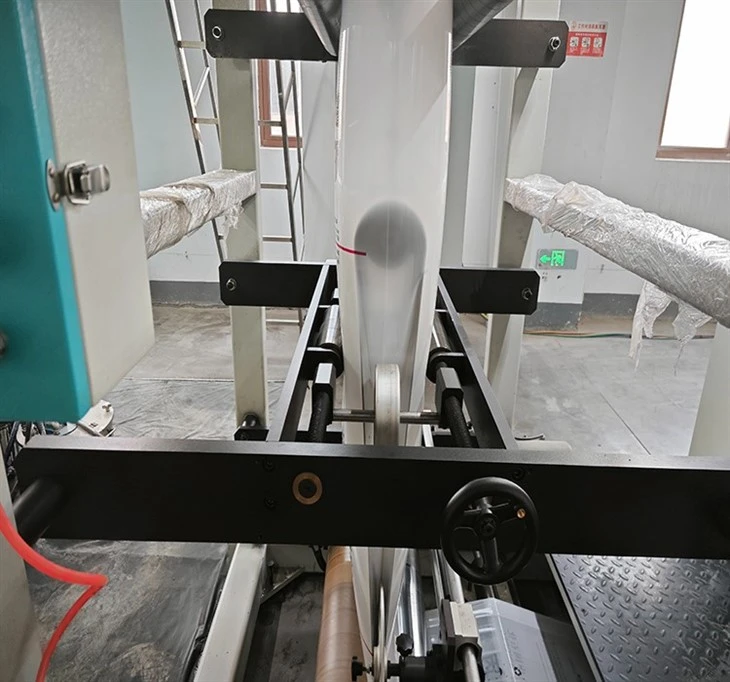
Before we discuss whether our FFS Film Flexo Printing Machine can print on laminated films, it is essential to understand how the machine works. Flexographic printing is a form of relief printing that uses flexible printing plates made of rubber or photopolymer. The ink is transferred from an anilox roller to the printing plate, and then from the plate to the substrate. The FFS (Form-Fill-Seal) aspect of the machine means that it can form the bag, fill it with product, and seal it in a continuous process.
Factors Affecting Printing on Laminated Films
Several factors need to be considered when determining whether our FFS Film Flexo Printing Machine can print on laminated films:
Surface Energy
The surface energy of the laminated film is crucial for proper ink adhesion. If the surface energy is too low, the ink may not adhere well to the film, resulting in poor print quality, such as ink smudging or peeling. To ensure good adhesion, the surface energy of the laminated film should be within a specific range. This can be measured using a surface energy test kit. If the surface energy is insufficient, corona treatment can be used to increase it. Our FFS Film Flexo Printing Machine is often equipped with corona treatment units to ensure optimal surface energy for printing.
Ink Compatibility
The type of ink used must be compatible with the laminated film. Different laminated films have different chemical compositions, and some inks may not adhere or dry properly on certain films. For example, solvent-based inks may be more suitable for some types of laminated films, while water-based inks may be preferred for others. It is important to select the right ink based on the specific characteristics of the laminated film. Our technical team can provide guidance on ink selection to ensure the best print results.
Print Pressure and Speed
The print pressure and speed of the FFS Film Flexo Printing Machine also play a role in printing on laminated films. If the print pressure is too high, it may damage the laminated film or cause the ink to spread unevenly. On the other hand, if the print pressure is too low, the ink transfer may be incomplete. Similarly, the printing speed needs to be adjusted according to the properties of the laminated film. A higher speed may be possible for some films, while others may require a slower speed for better print quality. Our machine allows for precise adjustment of print pressure and speed to accommodate different laminated films.
Our Experience with Printing on Laminated Films
Over the years, we have accumulated extensive experience in printing on various types of laminated films. We have worked with clients in different industries, such as food packaging, chemical packaging, and consumer goods packaging. In many cases, our FFS Film Flexo Printing Machine has been able to achieve high-quality prints on laminated films with proper adjustment of the printing parameters and selection of suitable inks.
For example, in the food packaging industry, laminated films are commonly used to provide a barrier against moisture, oxygen, and light. Our machine has been successfully used to print high-resolution graphics and product information on these films, ensuring that the packaging not only protects the product but also attracts consumers. In the chemical packaging industry, where laminated films with high chemical resistance are required, our machine has also proven to be capable of producing clear and durable prints.
Other Applications of Our Printing Machines
In addition to printing on laminated films, our Heavy Duty Bag Flexo Printing Machine and FFS Heavy-duty Bag Machine Inline Printer are also suitable for a wide range of other applications. These machines can print on various substrates, including non-laminated films, paper, and woven fabrics. They are commonly used for printing on heavy-duty bags, such as those used for agricultural products, construction materials, and industrial chemicals.
Conclusion
In conclusion, our FFS Film Flexo Printing Machine can print on laminated films, provided that the appropriate factors are considered and the necessary adjustments are made. With proper attention to surface energy, ink compatibility, print pressure, and speed, high-quality prints can be achieved on a variety of laminated films. Our experience in the industry and the advanced features of our machines make us a reliable choice for clients looking to print on laminated films.
If you are interested in our FFS Film Flexo Printing Machine or have any questions about printing on laminated films, please feel free to contact us for more information. We are always ready to provide professional advice and support to help you achieve the best print results.

References
- "Flexographic Printing: Principles and Practices" by Dr. Harold E. Hirsch
- "Packaging Materials and Processes" by Dr. John A. Robertson