

Hey there! As a supplier of Flexographic Press Machines, I often get asked, "Can a flexographic press machine print on paperboard?" Well, let's dive right into it and find out.
First off, let's talk a bit about flexographic press machines. These bad boys are pretty versatile. They use flexible relief plates to transfer ink onto various substrates. You might have seen them used for printing on things like plastic films, labels, and even corrugated boxes. But what about paperboard?
The short answer is yes, a flexographic press machine can definitely print on paperboard. In fact, it's a great option for many paperboard printing jobs. One of the main advantages of using a flexographic press for paperboard is its speed. These machines can churn out printed paperboard at a pretty high rate, which is awesome for large - scale production runs.
Another benefit is the quality of the print. Flexographic presses can produce sharp images and vibrant colors on paperboard. The flexible plates can conform to the surface of the paperboard, ensuring even ink transfer. This results in a high - quality print that looks great, whether it's for packaging, displays, or other applications.
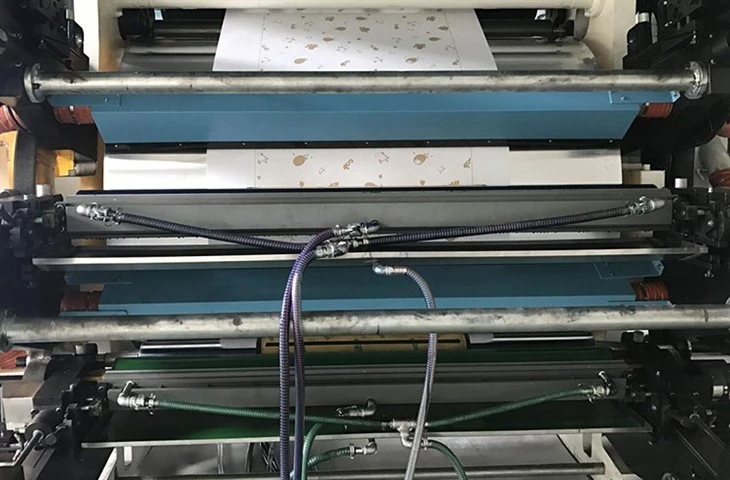

Now, let's get into the nitty - gritty of how it works. When printing on paperboard with a flexographic press, the first step is to prepare the flexographic plate. This plate has the image or text that you want to print. The plate is mounted on the plate cylinder of the press.
Next, the ink is applied to the plate. There are different types of inks that can be used for paperboard printing, such as water - based inks. Water - based inks are a popular choice because they're environmentally friendly and dry quickly.
Once the ink is on the plate, the paperboard passes through the press. As it does, the plate transfers the ink onto the paperboard, creating the printed image. The pressure between the plate and the paperboard is carefully controlled to ensure a good print quality.
But it's not all sunshine and rainbows. There are a few challenges that you might face when printing on paperboard with a flexographic press. One of the main issues is the absorbency of the paperboard. Different types of paperboard have different absorbency rates, which can affect how the ink dries and looks on the surface.
If the paperboard is too absorbent, the ink might soak in too quickly, causing the colors to look dull or the image to appear blurry. On the other hand, if it's not absorbent enough, the ink might not adhere properly, leading to smudging or uneven printing.
Another challenge is the thickness and stiffness of the paperboard. Thicker and stiffer paperboard can be more difficult to feed through the press smoothly. You might need to adjust the settings of the press, such as the tension and the speed, to ensure that the paperboard moves through the machine without jams or wrinkles.
Now, let's talk about some of the types of flexographic press machines that are well - suited for paperboard printing. One option is the 6 Color Central Drum Flexo Plastic Printing Machine For Plastic Film. Despite its name, this machine can also be used for printing on paperboard. It has a central drum design, which provides excellent registration and print quality.
The PE Film Flexo Printing Machine is another option. While it's often used for printing on PE film, it can also handle paperboard. It's a versatile machine that can be adjusted to print on different types of substrates.
The Ci Printing Press is also a great choice for paperboard printing. It offers high - speed printing and can produce high - quality prints on paperboard.
If you're in the market for a flexographic press machine for paperboard printing, there are a few things to consider. First, think about the size of the paperboard that you'll be printing on. Make sure the machine can handle the dimensions that you need.
Also, consider the number of colors that you want to print. Some flexographic press machines can print multiple colors in a single pass, which can save time and money.
Another important factor is the level of automation. Automated machines can be more efficient and reduce the need for manual labor. They can also provide more consistent print quality.
In conclusion, a flexographic press machine is a great option for printing on paperboard. It offers speed, quality, and versatility. While there are some challenges to overcome, with the right machine and the right settings, you can achieve excellent results.
If you're interested in learning more about our flexographic press machines or want to discuss your paperboard printing needs, don't hesitate to reach out. We're here to help you find the perfect solution for your business. Whether you're a small - scale printer or a large - scale manufacturer, we've got the expertise and the machines to meet your requirements. Let's start a conversation and see how we can work together to take your paperboard printing to the next level.
References
- Flexographic Printing: Principles and Practices, various industry sources
- Paperboard Printing Technologies, industry research reports